

Last Updated: October 30, 2026
Quick Summary
To wash graphic tees correctly, turn them inside out, use cold water on a gentle cycle, and choose a mild detergent. Then air dry them, since heat and friction are what crack, fade, and peel the print.
- Turn the shirt inside out so the print faces the washer wall, not other clothes.
- Use cold water, around 30°C (86°F), on a gentle or delicate cycle.
- Keep loads half full at most so clothes have room to move freely.
- Never use chlorine bleach, since it can discolor the fabric and break down the print.
- Air dry inside out, away from direct sun, and avoid wringing the shirt.
Table of Contents
- Why Graphic Tees Need Different Care
- Washing Graphic Tees Inside Out to Protect the Print
- Best Water Temperature for Graphic Tees and Cycle Settings
- Best Detergent for Graphic Tees and Stain Treatment
- How to Dry Graphic Tees Without Cracking the Print
- Planning Your Next Wash and Storage Routine
- Frequently Asked Questions
Graphic tees are built to be worn and loved, but the print is the first thing to suffer when they go through the wash. A few simple habits can keep a favorite shirt looking sharp for years.
Here is the short version: wash graphic tees inside out, use cold water, choose a gentle cycle, pick a mild detergent, and air dry.
Why Graphic Tees Need Different Care
A graphic tee is not just cotton. The print sits on top of the fabric, and that layer can crack, fade, or peel when it gets rough treatment.
The garment care label is a good starting point. It tells you the fabric content and the recommended wash temperature. Still, many people skip it, and that is where problems start.
Here is what usually damages a print:
- Friction from rubbing against other clothes in the drum
- Heat from hot water or a hot dryer
- Harsh chemicals like bleach or strong detergents
Knowing these risks makes the washing steps below easy to follow.
Washing Graphic Tees Inside Out to Protect the Print
Turning the shirt inside out is the single easiest step you can take. The printed side faces the inner wall of the washer instead of other clothes, so there is less friction on the design.
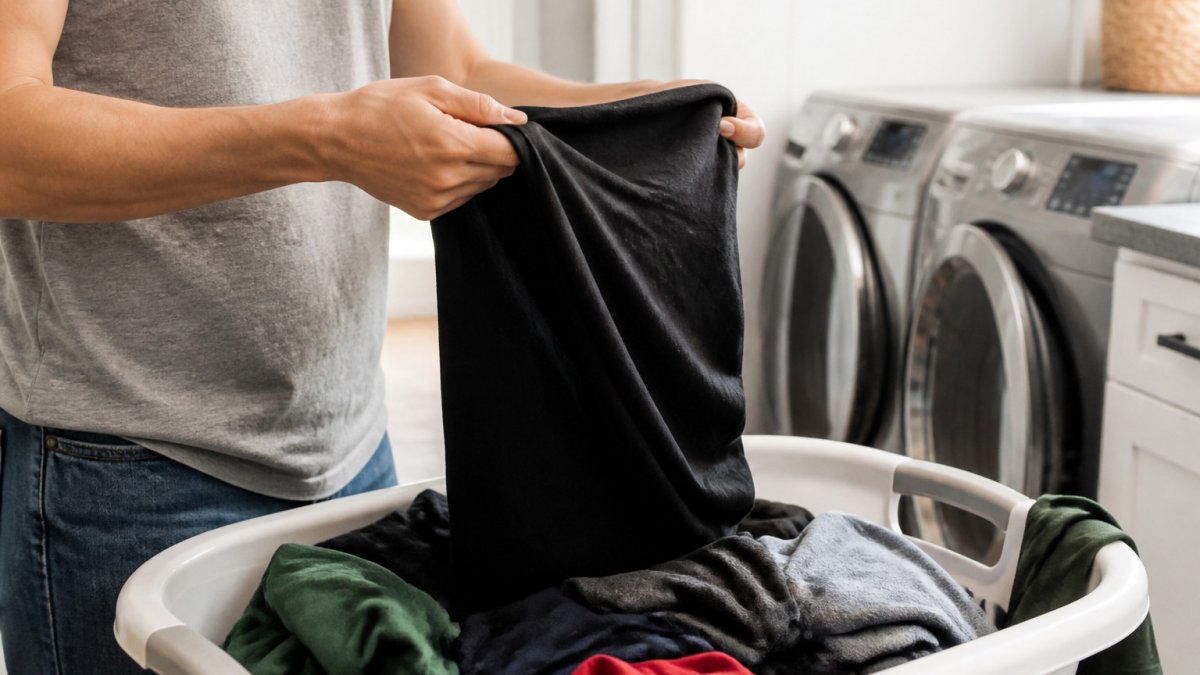
Follow these steps:
- Turn the shirt inside out before it goes in the machine.
- Wash it with similar colors so dye does not bleed.
- Keep it separate from heavy items like jeans and towels.
- Close zippers and fasten any buttons first.
Watch out: a crowded load is the fastest way to scuff a print. Leave room for the clothes to move freely.
![Close-up of hands turning a colorful graphic t-shirt inside out next to a laundry basket in a bright home laundry room | section:Washing Graphic Tees Inside Out to Protect the Print]
Best Water Temperature for Graphic Tees and Cycle Settings
Cold water is a safe choice for graphic tees. Hot water can weaken the ink, speed up fading, and cause shrinkage.
Use these settings for most graphic tees:
- Water temperature: Cold, around 30°C (86°F)
- Cycle: Gentle or delicate
- Spin speed: Low to medium
- Load size: Half full at most
A gentle cycle slows the drum and cuts down on the tumbling that wears away a print. If your machine has no gentle setting, a short, low-spin cycle works well.
The settings below give a quick reference for washing most graphic tees without damaging the print.
| Setting | Recommended | Why it matters |
|---|---|---|
| Water temperature | Cold, around 30°C (86°F) | Hot water weakens ink and speeds fading |
| Cycle | Gentle or delicate | Less tumbling wears away the print |
| Spin speed | Low to medium | Reduces stress on the design |
| Load size | Half full at most | Leaves room for clothes to move freely |
Best Detergent for Graphic Tees and Stain Treatment
Choose a mild, liquid detergent labeled for delicates or gentle care. Use the dose on the package, more detergent does not mean cleaner clothes, and excess residue makes prints feel stiff and can trap soil.
Water hardness matters more than most people realize. In hard water, minerals bind with detergent and leave a film on fabric that makes colors look hazy and prints feel rough.
Print-safe stain treatment by stain type
Never scrub a stain that sits on or near the print. Friction lifts ink and breaks down heat-transfer adhesives. Instead, blot and soak.
- Oil and grease: Blot excess with a paper towel, then apply a small amount of liquid dish soap or a mild pre-treat spray directly to the stain. Let it sit 5-10 minutes, then wash in cold water. Avoid rubbing the print.
- Sweat and deodorant: Soak the shirt in cool water with a small amount of mild detergent for 15-30 minutes, then wash normally. For yellowed underarm areas, a paste of baking soda and water can be dabbed on and rinsed before washing.
- Ink: Dab, do not rub, with a cloth dampened with isopropyl alcohol, testing a hidden spot first. Work from the outside of the stain inward so it does not spread, then rinse and wash.
- Food and drink: Scrape off solids, flush the stain from the back of the fabric with cool water, then apply a mild stain remover and wash. For colored stains like wine or coffee, a diluted white vinegar solution (about one part vinegar to three parts water) can help, but test first.
Match the detergent approach to the print method
Different print methods respond differently to detergent and agitation:
- Screen prints: Cured plastisol ink is durable and tolerates mild detergent well, but harsh solvents and hot water can still dull the surface.
- Heat transfers and vinyl: These rely on adhesive, so repeated hot washes and strong detergents can cause edges to lift. Cold water and mild detergent are especially important.
- Direct-to-garment (DTG) prints: These sit in the fabric fibers and can fade with abrasive detergents or over-washing. Liquid, dye-free detergent and inside-out washing help preserve detail.
When in doubt, follow the garment care label and choose the mildest detergent that gets the job done.
How to Dry Graphic Tees Without Cracking the Print
Heat and tumbling are the two forces that crack, peel, and fade prints during drying. High heat softens and stresses the ink or adhesive, while tumbling creates friction against the drum and other garments. Air drying avoids both.
Air-drying steps that protect the print
- Gently squeeze out excess water, do not wring or twist the shirt, which stretches the fabric and stresses the print.
- Lay the shirt flat on a clean towel or hang it on a line or drying rack.
- Keep it out of direct sun, which can fade both fabric and ink.
- Turn the shirt inside out while it dries so the print faces inward and is not abraded by the rack or line.
- If hanging, use a plastic or padded hanger at the shoulders rather than clipping the print area.
If you must use a dryer
Choose the lowest heat setting, air fluff or tumble dry low, and remove the shirt as soon as it is dry. Over-drying is as damaging as high heat because it continues to stress the print and fabric.
Print method changes the drying risk
- Screen prints: Cured plastisol is the most heat-tolerant, but repeated high heat still causes cracking over time.
- Heat transfers and vinyl: These are the most vulnerable to heat. Even low dryer heat can soften the adhesive and cause edges to lift, so air drying is strongly preferred.
- Direct-to-garment (DTG): DTG prints can fade with heat and abrasion; air drying preserves color depth and detail.
What to do when a print is already damaged
If a print is peeling or cracking, you can slow further damage but usually not fully reverse it:
- Stop using the dryer entirely and wash inside out in cold water on a gentle cycle.
- For minor peeling edges on heat transfers, a pressing cloth and a warm (not hot) iron for a few seconds can re-adhere small lifts, test on a hidden area first and never iron directly on the print.
- For cracking screen prints, there is no reliable home repair; focus on preventing worse damage by avoiding heat and friction.
- For fading, there is no restoration method, prevention through cold washing and air drying is the only reliable approach.
Planning Your Next Wash and Storage Routine
Think about how often you wash each shirt. Washing less often is one of the best ways to keep a print looking fresh.
When you store your graphic tees, fold them instead of hanging them, especially heavy prints that can stretch the shoulders.
Finally, keep in mind that pricing for custom orders depends on quantity, design, and delivery timing, so check eBollo.com for current pricing or request a quote for your project.
Frequently Asked Questions
Are you supposed to wash graphic tees inside out?
Yes. Turning a graphic tee inside out puts the printed side away from the drum, rubbing, and other clothes, which reduces friction and abrasion that can fade or crack the design over time. It is one of the simplest steps you can take. Zip any zippers and close Velcro before washing, and use a mesh laundry bag if you have one for extra protection. Inside-out washing matters most for dark or heavily printed shirts, but it costs nothing and helps every graphic tee last longer.
Is it okay to put graphic tees in the dryer?
A dryer is the biggest threat to a printed shirt, so air drying or using a low heat setting is the safer choice. High heat can crack, peel, and shrink the print and the fabric. If you do use a dryer, turn the shirt inside out, choose the lowest heat or an air-only setting, and remove it while still slightly damp so it can finish drying on a hanger or flat surface. Line drying in the shade also helps prevent color fading from direct sun.
Does hot water ruin graphic tees?
Hot water can fade colors, weaken the print, and cause shrinkage, so cold or cool water is the better choice for graphic tees. Cold water washing is effective for everyday dirt and sweat when paired with a mild detergent. Reserve warm water for heavily soiled items only if the care label allows it, and avoid hot water entirely for dark or heavily printed shirts.
What detergent should you use for graphic tees?
Choose a mild, liquid or color-safe detergent without bleach. Harsh chemicals and bleach can dull colors and degrade the ink. Use the recommended amount, since too much detergent can leave residue that dulls the print and affects how the fabric feels. Pre-treat stains with a small amount of mild detergent rather than scrubbing the print directly.


